ขีดจำกัดของ Complexity กับ Maillard phase
อัพเดทล่าสุด: 19 ม.ค. 2026
1873 ผู้เข้าชม
ขีดจำกัดของ Complexity กับ Maillard phase
พยายามยืด Maillard Phase ให้นานขึ้นเพื่อหวังเพิ่ม Complexity หรือกลิ่นรสซับซ้อน แต่ทำไมผลลัพธ์กลายเป็นทางตรงกันข้าม?
บทความนี้อาจเป็นคำตอบให้คุณได้ครับ
------------Maillard Phase หรือ MAI Phase คืออะไร?
Roast profile หรือเส้นโปรไฟล์การคั่ว โดยส่วนใหญ่เราจะแบ่งเป็น 3 ช่วงเวลา คือช่วงต้น Drying phase ช่วงกลาง (Maillard Phase) และช่วงท้ายคือ Development time
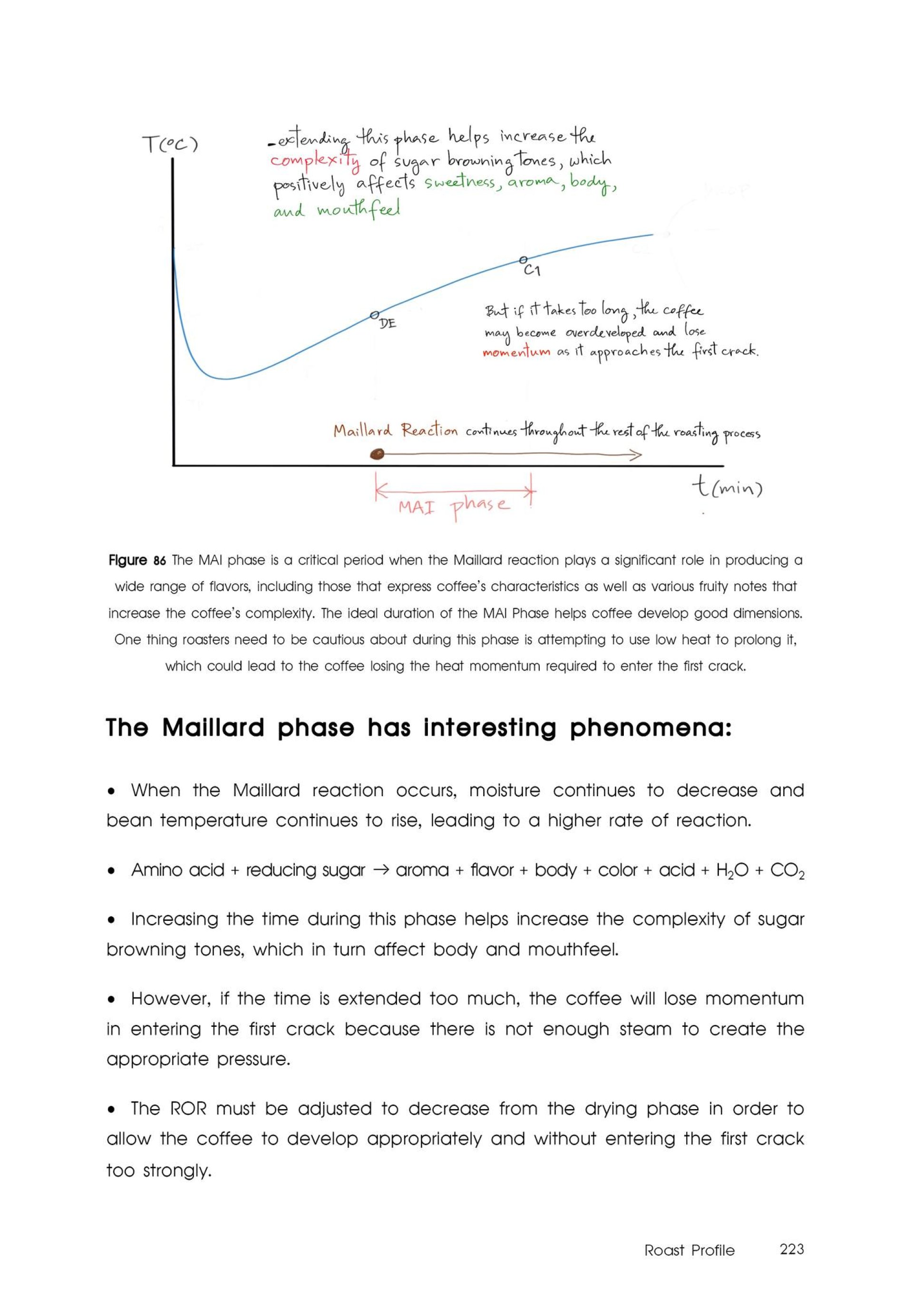
MAI Phase คือช่วงระยะเวลาในการคั่วช่วงหนึ่งนับตั้งแต่จุด Dry end หรือจุดที่เมล็ดกาแฟเริ่มต้นเกิด Maillard reaction อย่างเป็นเรื่องเป็นราว (โดยมากใช้การสังเกตเห็นว่าเมล็ดเริ่มเปลี่ยนเป็นสีน้ำตาลพร้อมกับเริ่มมีกลิ่นหอมแบบขนมปังปิ้ง) ไปสิ้นสุดช่วงที่เวลาเกิดเสียง First crack ขึ้น (เสียงแตกตัวครั้งแรกที่เริ่มมีการแตกตัวต่อเนื่อง) ค่าอุณหภูมิอ้างอิงก็คือช่วง 160 – 190 C โดยแต่ละเครื่องคั่วอาจจะมีชุดตัวเลขที่แตกต่างกันไปบ้างขึ้นกับโครงสร้างของเครื่อง ตำแหน่งและชนิดของอุปกรณ์วัด
Maillard reaction เป็นปฏิกิริยาเคมีให้สีน้ำตาล (browning reaction) ที่เกิดในระหว่างการคั่ว สร้างสารประกอบให้กลิ่นและรสที่เปลี่ยนไปเรื่อยๆ ตามระยะเวลาและระดับอุณหภูมิ โดยอาศัยสารตั้งต้น 2 กลุ่มมาทำปฏิกิริยากันได้แก่ น้ำตาลรีดิวซ์ และกรดอมิโน ปฏิกิริยานี้จะดำเนินอย่างเข้มข้นมากขึ้นเมื่อเมล็ดกาแฟมีระดับอุณหภูมิสูงขึ้น และเกิดไปตลอดทางของการคั่วจนกระทั่งยุติการคั่ว หมายความว่าแม้จะผ่าน first crack ไปแล้ว Maillard reaction ก็ยังเกิดต่อไปเรื่อยๆ
การที่เรียกช่วงจาก DE (Dry end) ไปจนถึง First crack ว่า MAI phase จึงน่าจะเป็นการบอกแต่เพียงว่า มันเป็นช่วงเวลาที่ Maillard reaction มีอิทธิพลมากที่สุด เพราะยังไม่มีปฏิกิริยาเคมีกลุ่มอื่นเกิดขึ้นมาแข่งอิทธิพลด้วย หรือหากจะมีก็เป็นเพียงช่วงเหลื่อมกันตอนท้ายที่เริ่มมี pyrolysis และ caramelization เกิดก่อน first crack เล็กน้อย
------
ความเชื่อเกี่ยวกับ fruity floral, complexity และระยะ MAI Phase
มีนักคั่วหลายคนเชื่อว่าหากต้องการให้คั่วให้ได้ fruity floral มากๆ หลายชนิดมัดรวมกัน ก็ควรยืดระยะเวลาของช่วง MAI phase นี้ให้นานขึ้น พอปฏิกิริยาเกิดนาน กลิ่นแนวนี้ก็จะอาจจะถูกผลิตมากขึ้น รวมไปจนถึงความหวานที่มักจะเพิ่มด้วยเช่นกัน ดังนั้นนักคั่วที่เชื่อแนวคิดนี้ก็จะเลือกใช้พลังงานที่ไม่สูงนักหรือเรียกง่ายๆว่าผ่อนแรงไฟลงเพื่อให้ระยะเวลาช่วงนี้ยาวขึ้น
ปัญหาอยู่ที่ว่า ไม่ใช่ทุกคนที่ทำแล้วได้ผลดี เมื่อยืดให้ช่วง MAI ยาวขึ้นบางคนได้ผลลัพธ์ที่ดีขึ้นจริง แต่บางคนกลับได้ผลเป็นทางตรงกันข้ามคือไม่ค่อยมีกลิ่น รสชาติติด greeny บ้าง คล้ายถั่วดิบบ้าง หรือหากจะมีกลิ่นดอกไม้ผลไม้ก็มาไม่เต็มที่
หนักกว่านั้นก็อาจกลายเป็นกาแฟมี acidity และ ความหวานที่ลดลงกว่าเดิม
เชื่อว่าคงมีหลายคนที่มีประสบการณ์ตรงกันบ้างนะครับ คือยืดเวลาออกไปก็ได้ผลดี แต่พอยืดให้ยาวออกไปอีกผลกลับเป็นไม่ดี
วิเคราะห์เบื้องต้นได้ว่า “ระยะเวลา MAI ที่ให้ผลดีต่อรสชาติโดยรวมของกาแฟ มีขีดจำกัดของมันอยู่” และ “ใช่ว่ายิ่งนานจะยิ่งดี” แต่...สั้นไปก็ไม่ดีเหมือนกัน
ปรากฏการณ์นี้เป็นเพราะอะไรนะ?
ผมขอเสนอแนวทางอธิบายด้วยแนวคิด Good Reaction ครับ
------
แนวคิดเกี่ยวกับ good reaction และ well-balance heat momentum
หากเรามองว่า Flavor ของกาแฟเป็นผลมาจาก Reaction ต่างๆที่เกิดขึ้นระหว่างการคั่ว ระดับอุณหภูมิกำหนดชนิดของสารประกอบที่จะถูกสร้าง ส่วนอัตราการเกิด reaction (reaction rate) ก็กำหนดอัตราการเกิดสารประกอบนั้นๆ
อัตราการเกิด reaction ที่ดีหรือเหมาะสมในช่วงเวลาหนึ่งๆ จะช่วยสร้างสารประกอบให้ flavor ที่ดีครบถ้วนได้ โดยเฉพาะอย่างยิ่งในช่วงเวลาวิกฤตอย่าง First crack นับตั้งแต่ก่อน First crack เล็กน้อย ไปจนถึงหลัง First crack ไประยะหนึ่ง จนกว่ากาแฟจะก้าวข้ามช่วงกึ่งสุกกึ่งดิบ ไปเป็นช่วงสุกครบทั้งเมล็ด
Reaction ที่ดีงามในช่วง First crack นี้ผมขอเรียกมันว่า Good reaction ไปก่อน
เราจะรู้ได้ยังไงว่า good reaction มันต้องเป็นเท่าไหร่? มีค่าตัวเลขที่ตรวจวัดได้มั้ย? ตรงนี้ผมคิดว่าเราสามารถแปลออกมาเป็นตัวเลขบางชุดได้นะ แต่ก่อนจะมุ่งไปสู่จุดนั้น เรามาทำความเข้าใจมันอีกนิดนึงก่อนว่า good นี่มันเป็นยังไง? ซึ่งเรามาทำการทดลองในความคิดด้วยกันง่ายๆ ได้ครับ ลองหลับตานึกถึงกรณีที่ตรงกันข้ามกับ good คือการเกิด not good reaction กัน
1. ถ้าคั่วกาแฟด้วยไฟแรงไป ทุกอย่างจะเปลี่ยนเร็วไปหมด เสียงแครกมาถึงค่อนข้างเร็ว อุณหภูมิของเมล็ดก็ขยับขึ้นสูงอย่างรวดเร็ว คุณจะได้กาแฟที่ติดขมไหม้บริเวณผิวเมล็ดในขณะที่เนื้อด้านในอาจจะยังเปรี้ยวมากหรือเปรี้ยวชัดเจน รสชาติไม่สมดุล จนบางทีตัวมือคั่วก็ไม่รู้ว่าควรจะเรียกกาแฟของตัวเองว่าคั่วอ่อน หรือคั่วกลางดี จุดที่น่าเสียดายมากก็คือกาแฟไม่ได้ความหวาน aftertaste จึงไม่น่าประทับใจ ปฏิกิริยาเคมีการคั่วที่เกิดจากการให้ไฟแรงไป จะมีช่วงสร้าง aroma สวยงาม ความหวานใสๆ เพียงช่วงสั้นๆ แล้วข้ามผ่านไปสู่กลุ่มปฏิกิริยาเคมีที่รุนแรง ให้ความเป็นถ่าน ขมฝาด อย่างรวดเร็ว
2. ถ้าคั่วด้วยไฟอ่อนไป สีของเมล็ดจะเปลี่ยนช้า การพองตัวของเมล็ดก็ไม่ค่อยเกิดเต็มที่ เสียงแครกมาถึงช้าที่ระดับอุณหภูมิค่อนข้างสูง กาแฟออกมารสชาติค่อนข้างแบน ไม่มี acidity ชัดเจน หากอยากให้กาแฟไม่ติดเขียวต้องรอเวลาในช่วง development time ค่อนข้างนาน แต่พอกาแฟสุกดี ก็ยังได้รสชาติการคั่วแบบ roasty flavor เป็นของแถมมาด้วย
ตัวอย่างทั้งสองแบบที่ผมยกมานี้คือ not good เพื่อให้พวกเราเห็นภาพของ good reaction ได้ดีขึ้น
หากสังเกตให้ดีเราจะเห็นได้ว่า Good reaction สัมพันธ์กับแรงไฟในระหว่างการคั่วช่วงนั้นๆ ครับ และหากจะมองให้ลึกลงไปอีกนิด แรงไฟนั้นก็คือโมเมนตัมทางความร้อน (heat momentum ) ที่ส่งผ่านจากระบบของเครื่องคั่วไปจนเกิดผลกับเมล็ดกาแฟ
สรุปเบื้องต้นว่า good reaction ส่งเสริมการพัฒนา flavor ที่ดีทั้งความเปรี้ยว หวาน และกลิ่น หากเราสามารถควบคุมความร้อนให้ได้ในระดับที่เกิด good reaction โดยเฉพาะในช่วงระหว่างเกิด first crack ไปจนถึง development time กาแฟก็จะเกิดรสชาติเต็มที่ รวมถึงให้ complexity ด้วย
กุญแจสำคัญอยู่ที่การเข้าสู่ช่วง first crack ด้วย Good reaction ซึ่งจะให้แรงส่งทางความร้อนแบบสมดุลคือไม่มากเกินหรือน้อยเกินไป โดยแรงส่งทางความร้อนนี้เราสามารถดูได้จาก อัตราการเพิ่มขึ้นของอุณหภูมิเมล็ด หรือที่รู้จักกันดีว่า ROR นั่นเอง
------
ระยะเวลาของช่วง MAI ที่เหมาะสมคือการส่งเสริม well-balance heat momentum
ระยะเวลาของช่วง MAI แท้จริงก็คือการกำหนดลักษณะการใช้ไฟของนักคั่วครับ โดยมันจะพาเมล็ดกาแฟให้เข้าสู่ first crack ในระดับ ROR ที่เหมาะสม (หรือเกิด good reaction และเป็น good development )
- หาก MAI นาน เราจะใช้ไฟอ่อน heat momentum ก็อ่อน
- หาก MAI สั้นเกิน เราจะใช้ไฟแรง heat momentum ก็แรง
นี่จึงเป็นที่มาของปรากฏการณ์ที่นักคั่วยืดเวลา MAI แล้วได้ผลลัพธ์ดีเพียงช่วงหนึ่งแต่ได้ผลแย่ลงอีกเมื่อยืด MAI นานเกินช่วงที่เหมาะสม
เมื่อพูดมาถึงจุดนี้ เราจึงควรมาเปลี่ยนการให้ความหมายแก่ MAI phase กันใหม่ว่า มันคือช่วงเวลาที่จะส่งต่อ heat momentum ให้แก่ช่วง development time
มาถึงคำถามสุดท้ายว่า แล้ว ROR ในตอนเข้า first crack ที่จะให้ good reaction น่าจะเป็นเท่าไหร่?
จากประสบการณ์และการทดลองของผม คิดว่า ROR ที่ดีสำหรับ first crack ควรอยู่ระหว่าง 7-13C/min
และ MAI phase ที่ถือเป็นจุด safe zone แนะนำระยะเวลาที่ 3 นาที บวกลบนิดหน่อย
หากคั่วให้เข้าเป้าช่วงนี้ได้ นักคั่วจะทำงานง่าย ผลงานไม่ค่อยพลาดเป้าครับ
ขอบคุณที่ตามอ่านจนจบนะครับ
------
หนังสือ Simplicity in Coffee Roasting ฉบับภาษาอังกฤษ เวอร์ชั่น Thailand print หรือจัดพิมพ์ในประเทศไทย ได้พิมพ์เสร็จและเริ่มเปิดจำหน่ายแล้วนะครับ ดีใจมากที่มีแฟนติดตามมาจากหลายประเทศ หากเพื่อนๆ สนใจสั่งซื้อก็ติดต่อผ่านทางแอดมินของเพจโรงคั่วกาแฟปรีดาได้เลยนะครับ ช่วงนี้เป็นโปร early bird ลด 15% จาก 2,500 บาทเหลือ 2,125 บาท จนถึงสิ้นเดือนมกราคม 2026 นี้นะครับ
The Limits of Complexity and the Maillard Phase
Many roasters try to extend the Maillard Phase in hopes of increasing complexity or achieving more layered flavors. But why do the results sometimes turn out to be the exact opposite?
This article may offer an answer.
⸻
What Is the Maillard Phase (MAI Phase)?
A roast profile is typically divided into three main stages: the initial Drying Phase, the middle Maillard Phase, and the final Development Time.
The Maillard Phase (MAI Phase) refers to the period from Dry End (DE)—when the coffee beans begin to undergo Maillard reactions in a noticeable way—until the onset of First Crack (the first audible, continuous cracking sounds). Practically speaking, Dry End is often identified when the beans begin turning brown and emit aromas reminiscent of toasted bread.
The commonly referenced temperature range for this phase is approximately 160–190°C, although the exact numbers may vary depending on roaster design, probe placement, and sensor type.
The Maillard reaction is a browning reaction that occurs during roasting, creating a wide range of aroma and flavor compounds that evolve with time and temperature. It relies on two main precursor groups: reducing sugars and amino acids. As bean temperature increases, this reaction becomes more intense and continues throughout the roast until roasting is stopped. This means that even after First Crack, Maillard reactions are still ongoing.
Calling the period from Dry End to First Crack the “Maillard Phase” mainly indicates that Maillard reactions dominate during this window, before other chemical reactions begin to strongly compete. Toward the end of this phase, there may be some overlap, as pyrolysis and caramelization can begin slightly before First Crack.
⸻
Beliefs About Fruity–Floral Notes, Complexity, and MAI Duration
Many roasters believe that if they want pronounced fruity and floral characteristics—multiple notes layered together—they should extend the Maillard Phase. The assumption is that a longer reaction time will generate more of these aromatic compounds, along with increased sweetness. Roasters who follow this approach often reduce heat input, or “ease off the fire,” to lengthen this phase.
The problem is that this approach does not work equally well for everyone. Some roasters do see improvement when they extend the MAI Phase, but others experience the opposite: muted aromas, green or raw nut–like flavors, or floral and fruity notes that never fully develop. In more severe cases, acidity and sweetness may actually decrease.
Many roasters have likely experienced this firsthand: extending the MAI Phase initially improves the cup, but pushing it even further makes the result worse.
This suggests that there is a limit to how long the Maillard Phase can beneficially contribute to overall flavor, and that longer is not always better—though too short is also problematic.
Why does this happen?
I would like to propose an explanation based on the concept of Good Reaction.
⸻
Good Reaction and Well-Balanced Heat Momentum
If we consider coffee flavor as the result of various reactions occurring during roasting, then temperature determines what kinds of compounds are formed, while the reaction rate determines how quickly and how much of those compounds are produced.
A suitable reaction rate at a given moment allows desirable flavor compounds to develop fully—especially during the critical window around First Crack, from slightly before First Crack to some time after, until the beans transition from a partially cooked state to being fully cooked throughout.
I call the desirable set of reactions occurring around First Crack a Good Reaction.
How do we know what constitutes a good reaction? Can it be quantified? I believe it can be translated into measurable values, but before going there, let’s clarify what “good” means by imagining its opposite—not good reactions.
1. Too much heat
When roasting with excessive heat, everything happens too quickly. First Crack arrives early, bean temperature rises rapidly, and the coffee often tastes burnt or bitter on the surface while the interior remains sharp and sour. The flavor balance is poor—sometimes even the roaster is unsure whether to call the result a light or medium roast. Most disappointing is the lack of sweetness and aftertaste. With excessive heat, the window for developing clean sweetness and pleasant aromas is very short before the roast jumps straight into harsh, carbonized, bitter reactions.
2. Too little heat
When heat is too low, color development is slow, bean expansion is limited, and First Crack arrives late at a relatively high temperature. The resulting coffee often tastes flat, with little clarity in acidity. To remove green flavors, the roaster must extend development time, but once the coffee is finally cooked, roasty flavors often dominate as an unintended byproduct.
These two examples illustrate not good reactions, helping us better visualize what a good reaction should look like.
If we observe carefully, we can see that good reactions are closely tied to heat input during roasting. More precisely, they are linked to heat momentum—the thermal momentum transferred from the roasting system into the coffee beans.
In summary, good reactions support balanced flavor development, enhancing acidity, sweetness, and aroma. If we can control heat so that good reactions occur—especially from First Crack into Development Time—the coffee will reach full flavor expression, including complexity.
⸻
Entering First Crack With Good Reaction
The key lies in entering First Crack with good reaction, which requires well-balanced heat momentum—neither too strong nor too weak. This thermal momentum can be observed through the Rate of Rise (ROR) of bean temperature.
⸻
MAI Duration as a Tool for Balancing Heat Momentum
In reality, the duration of the Maillard Phase reflects how the roaster manages heat. It determines how the beans approach First Crack with an appropriate ROR—supporting good reaction and good development.
• Long MAI Phase → lower heat input → weaker heat momentum
• Short MAI Phase → higher heat input → stronger heat momentum
This explains why extending the MAI Phase can improve results up to a point, but leads to poorer outcomes once it exceeds the optimal range.
At this point, we should redefine the Maillard Phase:
It is the phase that prepares and delivers heat momentum into Development Time.
⸻
Practical Guidelines
So, what ROR at First Crack tends to produce good reactions?
Based on my experience and experiments, a suitable ROR at First Crack generally falls between 7–13°C per minute.
A safe-zone MAI duration is around 3 minutes, give or take slightly.
When roasts consistently hit this window, roasting becomes easier and results are more reliable.
Thank you very much for reading to the end.
⸻
Simplicity in Coffee Roasting – English Edition (Thailand Print)
The English edition of Simplicity in Coffee Roasting, printed in Thailand, has now been completed and is officially available. I’m truly happy to see readers following from many countries. If you’re interested in ordering a copy, please contact the admin of the Preda Coffee Roasting House page.
Early Bird Promotion: 15% off—from 2,500 THB to 2,125 THB, valid until the end of January 2026.


บทความที่เกี่ยวข้อง
ช่วง 5 ปีหลังมานี้ เราพูดถึงคำว่า Fermentation หรือ ‘การหมัก’ ในการทำโปรเสสกาแฟค่อนข้างมาก ซึ่งบางทีก็มากเสียจนชวนให้สับสน
หนึ่งในปัญหาโลกแตกของคนคั่วกาแฟก็คือเจ้าสิ่งที่เรียกว่า Acidity ในกาแฟคั่วอ่อนนี่แหละครับ
เราควรใช้ Dev. Temp เท่าไหร่ดีนะ? แล้ว Dev.time ล่ะจำเป็นต้องยาวนานแค่ไหน? ทำไมใครๆเขาก็บอกว่าให้ใช้แค่นาทีเดียวอย่าเกินนั้น...ถ้าเกินแล้วจะเป็นยังไง?
