Coffee & Life Expectancy: How Many Cups Help?
How Many Cups of Coffee a Day Help You Live Longer? New Research Has an Answer
A study tracking 43,114 US adults for 8.7 years found that drinking 1-2 cups of coffee daily was linked to 2.02 more years of life expectancy at age 50 compared with non-drinkers, mostly from reduced cardiovascular deaths -- but the benefit only held for coffee without added sugar.
What did this study actually find?
Published in Public Health Nutrition in August 2025, this study used data from the US National Health and Nutrition Examination Survey (NHANES) from 2001 to 2018, following 43,114 adults aged 20 and older for a median of 8.7 years. Over that period, 6,234 deaths were recorded.
Estimated life expectancy at age 50 varied by daily coffee intake: 30.06 years for non-drinkers, 30.82 years for those drinking up to 1 cup, 32.08 years (the peak) for 1-2 cups, 31.24 years for 2-3 cups, and 31.45 years for more than 3 cups.
The relationship forms an inverted-U shape: both too little and too much coffee show smaller benefits than the middle range, with roughly 1-2 cups per day associated with the greatest gain.
Why does 1-2 cups a day give the best result?
Compared with non-drinkers, people who drank 1-2 cups per day had a 19% lower risk of all-cause mortality and an 18% lower risk of cardiovascular disease (CVD) mortality -- translating to an average gain of 2.02 years of life expectancy, with nearly a third of that gain (about 0.61 years) attributable directly to reduced CVD deaths.
Those drinking more than 3 cups per day still showed lower mortality risk (13% lower all-cause, 27% lower CVD) and a life expectancy gain of 1.39 years, but clearly less than the 1-2 cup group -- suggesting moderate intake offers the best return in this study.
How much does added sugar change the picture?
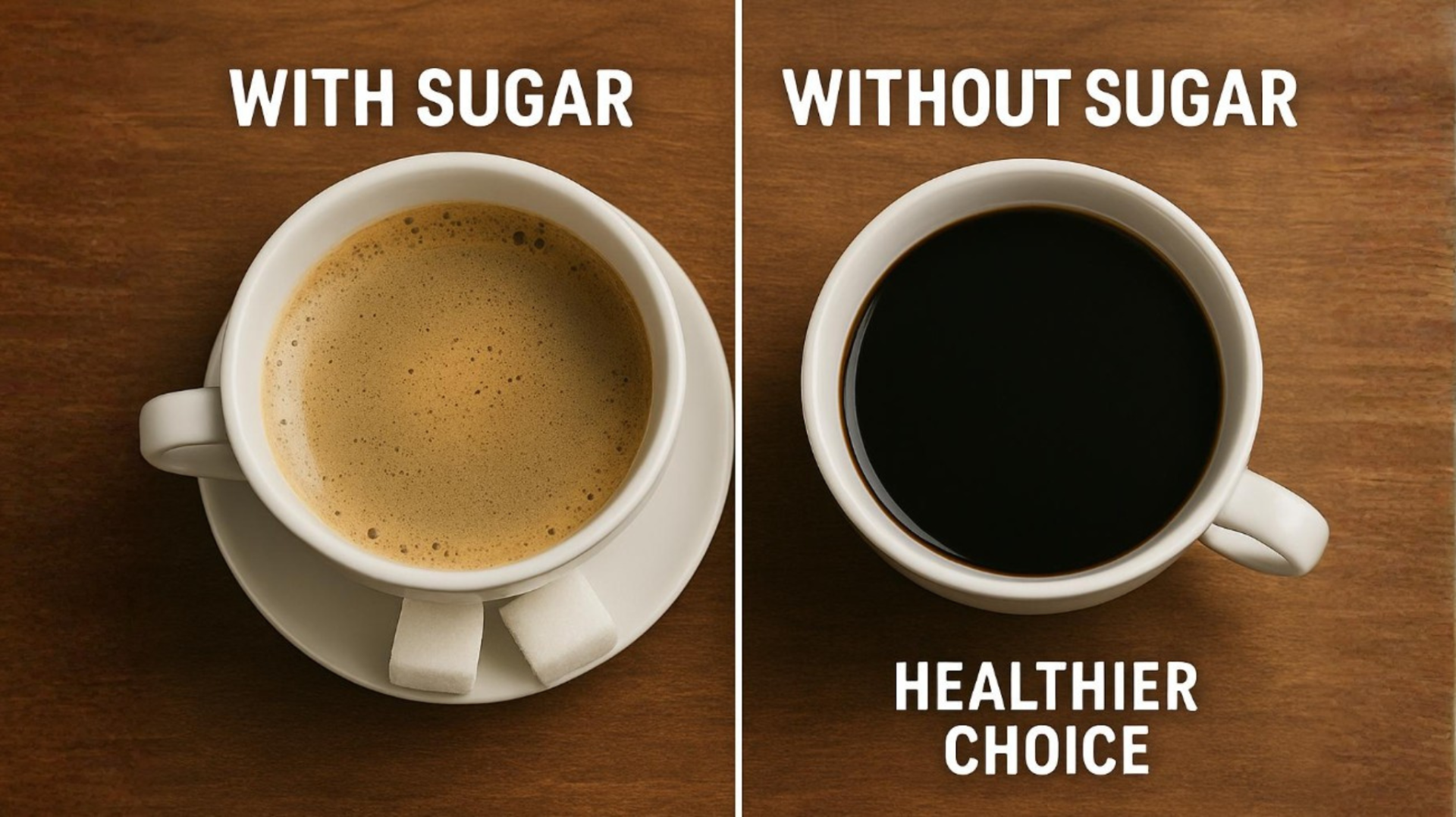
This is the most notable detail in the study. When researchers split participants by whether they added sugar to their coffee, the unsweetened group showed a statistically significant life expectancy gain of 1.97 years -- while the sugar-added group showed no significant gain at any level of coffee consumption.
This lines up with Preda's long-standing approach of drinking coffee black or with minimal sugar -- not just for tasting a specialty coffee's true flavor, but now with health data pointing the same direction. For anyone looking to cut back on sugar, Preda's House Blend or Original Blend both work well brewed black with a manageable, well-balanced bitterness.
Does freshly brewed coffee differ from instant coffee here?
The study also broke results down by preparation method. Non-instant coffee (ground and brewed, including drip) at 1-2 cups per day was linked to a 2.04-year gain in life expectancy. Instant coffee showed benefits only at lower intake -- a 1.73-year gain at up to 1 cup and 1.41 years at 1-2 cups -- with no significant benefit at higher amounts.
This doesn't mean instant coffee is harmful, but it does suggest freshly brewed coffee may offer a more consistent benefit across a wider range of intake -- something that aligns naturally with a roasting house's focus on bean freshness and home brewing.
Does everyone benefit equally?
Benefits were found in both men (average gain of 2.17 years) and women (1.82 years). By ethnicity, significant gains appeared among White and Black participants, but not among Hispanic participants in this dataset -- a difference the study authors themselves could not fully explain.
Decaffeinated coffee only showed a significant benefit among people drinking more than 3 cups per day, though this estimate has a wide confidence interval due to a small subsample and should be read cautiously. (Note: Preda does not currently offer a decaffeinated product.)
What are the limitations of this study?
This is an observational cohort study, not a randomized controlled trial -- it can show association, not prove that coffee directly causes longer life expectancy. Coffee intake was self-reported through 24-hour dietary recalls, which can introduce recall bias.
All data comes from a US population, whose diet, genetics, and coffee-drinking habits may differ meaningfully from a Thai population. Some subgroup estimates have wide confidence intervals due to limited sample sizes, and the study did not analyze factors like roast level or milk/creamer beyond sugar content.
So what's the practical takeaway from this research?
Based on the full picture, the approach this study supports most is moderate coffee intake (1-2 cups a day), unsweetened, and ideally freshly brewed rather than instant when possible. That said, this is supportive data for people who already drink coffee -- not a recommendation to start drinking coffee specifically for this benefit. Anyone sensitive to caffeine or managing a health condition should talk to a doctor about the right amount for them.
Frequently Asked Questions (FAQ)
Q1. Does coffee with milk but no sugar count as the 'unsweetened' group?
The study grouped participants mainly by added sugar, not milk specifically. Unsweetened coffee with milk would still sit closer to the group that showed a significant benefit than sugar-added coffee.
Q2. If I don't drink coffee, should I start for this benefit?
Not necessarily. This is observational data from people who already drink coffee, not a recommendation to start drinking coffee specifically for a life-expectancy benefit.
Q3. Is drinking more than 3 cups a day risky?
The study still found a link to increased life expectancy at that level, though smaller than 1-2 cups, and high caffeine intake can cause palpitations, insomnia, or anxiety in some people, so it's worth listening to your own body.
Q4. Does this study apply to a Thai population?
The data comes from a US population, whose diet and genetics may differ from a Thai population, so the results are a useful reference trend rather than a guaranteed outcome for everyone.
Q5. Does instant coffee offer no benefit at all?
Not none -- but the study found instant coffee's benefit was clearest at lower intake and not significant at higher amounts, unlike freshly brewed coffee which showed more consistent benefit.