Can Believing You Had Caffeine Boost Exercise?
Somewhat. A review of 17 trials published in October 2026 found that people given a caffeine-free capsule they were told contained caffeine performed better by a small-to-moderate amount and felt less tired. That evidence is weak, and a larger trial found real caffeine clearly beats belief alone.
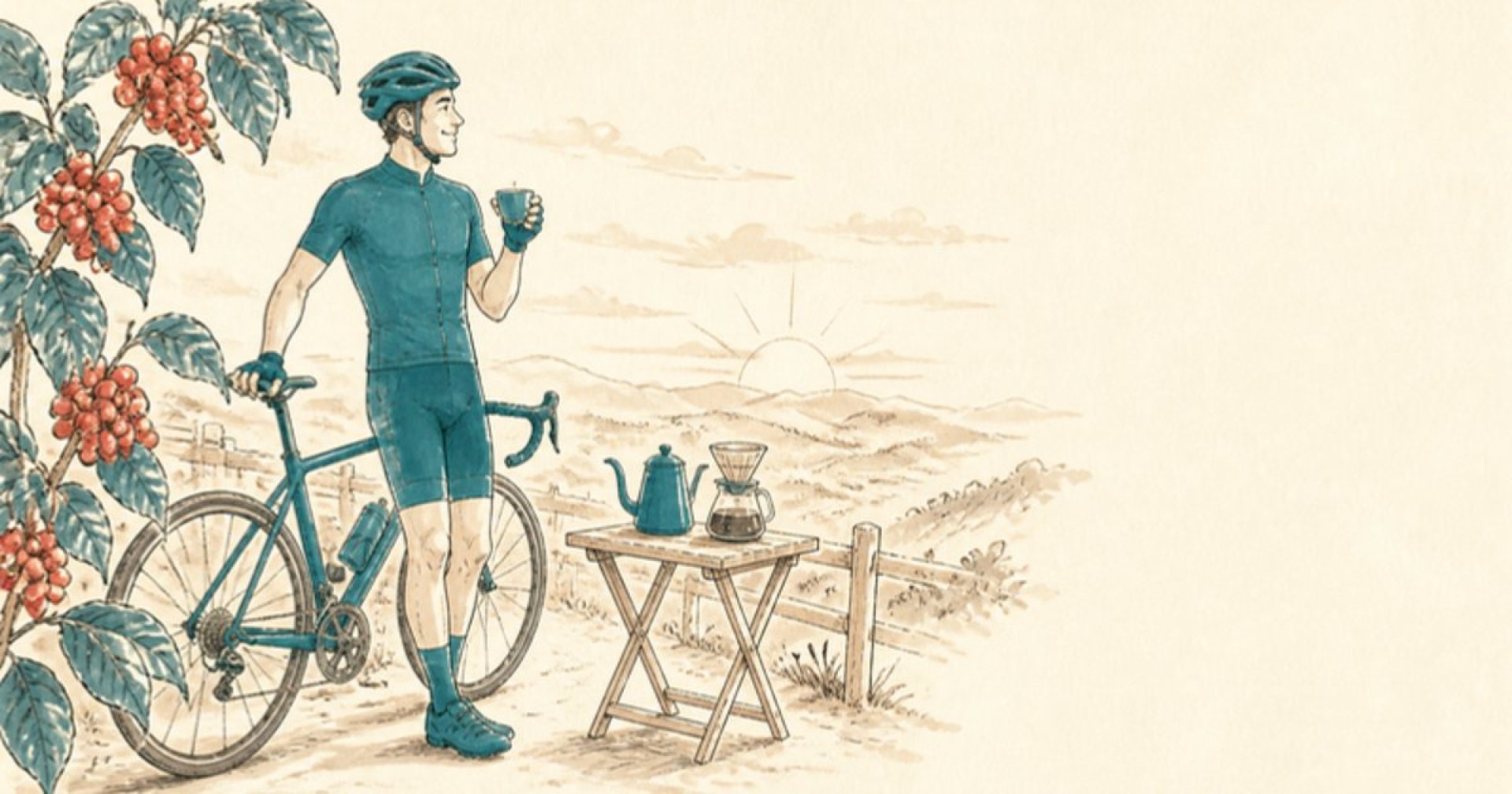
If you tell cyclists a capsule is caffeine, will they ride harder?
In 2006, Christopher Beedie's team at Canterbury Christ Church University in the UK asked six well-trained cyclists to ride 10 km time trials. Before each ride they swallowed a capsule and were told it was a placebo, a moderate dose of caffeine or a high dose.
Every capsule was a placebo. No one got any caffeine.
When they believed they had the placebo, they rode about 1.4% below their usual power. When they believed it was the moderate dose, power rose 1.3%, and when they believed it was the high dose, it rose 3.1%. All of them also described feeling caffeine's effects from capsules that contained none.
These numbers come from six people, and the margin of error is wide enough that the true effect could be zero. Beedie's study opened a question for others to chase rather than settling it.
If something seemed to work before, does it work better next time?
Two years later, Antonella Pollo and Fabrizio Benedetti at the University of Turin tested a leg-extension task. When people got a placebo described as high-dose caffeine, they did more work but still felt just as tired.
The second experiment went further. In two practice sessions, the team gave the same placebo and quietly lowered the weight, so the 'caffeine' seemed to work. On test day the weight went back to normal. This time the placebo effect was bigger: more work and less fatigue. The authors concluded that learning from past experience strengthens placebo effects.
It's possible that a morning coffee drunk before hundreds of runs trains the body in a similar way. That is a guess from lab experiments; nobody has measured it in everyday coffee drinkers.
Put all the experiments together: how much does belief help?
In October 2026, Philip Hurst's team, at the same university as Beedie, gathered every experiment of this kind they could find: 17 trials from 2006 to 2026, with 257 people in total. Each gave something without caffeine, such as a capsule, decaf coffee, saline or gum, and called it caffeine. The review appeared in the Journal of the International Society of Sports Nutrition.
Overall, performance improved by a small-to-moderate amount. The best-supported effect was lower perceived exertion, seen across 11 trials, followed by more repetitions and more total weight lifted. Endurance before exhaustion looked like the biggest effect, but it rests on only 2 trials with 17 people. Power output, speed and heart rate barely changed.
One detail ran against expectations. In trials where the researchers themselves didn't know they were handing out a placebo, the effect was larger. The authors suggest researchers who knew may have dampened participants' confidence through their tone or body language without meaning to.
So do you still need real caffeine?
A larger study tested exactly that. Bryan Saunders' team at the University of São Paulo had 42 cyclists ride a roughly 30-minute time trial three times: once after 6 mg of caffeine per kg of body weight, once after a placebo and once with nothing.
Real caffeine made them about 4.1% faster than the other two sessions. The placebo was barely different from taking nothing. Cyclists who correctly guessed they'd had caffeine improved by 4.86.5%, slightly more than average.
In Preda's article on why coffee wakes you up, we described caffeine as a 'fake key' that takes the parking spot of adenosine, the molecule that tells your brain you're tired. Saunders' study shows that key really works, and works best when you know it's in the cup, like a boxer who has trained well and also hears their walk-out song.
The International Society of Sports Nutrition concluded in its 2021 position stand that 36 mg of caffeine per kg reliably helps exercise, that the minimum effective dose may be about 2 mg per kg, and that very high doses such as 9 mg per kg add side effects without being needed. Another São Paulo study of 40 cyclists found regular coffee drinkers gained about as much from pre-ride caffeine as light drinkers.
Can belief make your workout worse?
Yes. In Saunders' study, cyclists who correctly guessed they'd had the placebo tended to ride worse than when they took nothing. Researchers call this a nocebo effect: a negative expectation that drags performance down. Hurst's review also notes that knowing you received a placebo could worsen results.
On mornings you forget your coffee and your legs feel heavy despite a good night's sleep, part of that may be this effect. Regular drinkers may also have mild caffeine withdrawal. The two are hard to separate, and no study has measured this directly in everyday exercisers.
What are the weak points of this research?
The authors of the 2026 review rated the overall evidence as low certainty. Of the 17 trials, 9 had a high risk of bias and 8 lacked enough detail to judge; none met the low-risk standard. 82% of participants were men, with a median age of about 23, and most were athletes, so results may not hold for women, older adults or beginners.
A 2018 review from the University of Derby of 17 caffeine-expectancy studies found expectancy effects in 13 of them, of widely varying size, and in many cases comparable to caffeine's real effect. Its authors also flagged inconsistent study designs.
Then there's ethics. The 2026 authors state plainly that secretly giving athletes a placebo in practice is unethical. Their advice is to use real caffeine and fully expect it to help, because the placebo component works alongside caffeine's real effect.
How can everyday exercisers use this?
Start with the amount. As Preda explained in how much coffee before exercise actually helps, a low dose of about one to two cups already shows benefits. There's no reason to add cups to chase a feeling; more caffeine means more risk of jitters and poor sleep.
For timing, drink it 3060 minutes before you start, when caffeine in the blood peaks. While you sip, think through today's plan: how far you'll run, how many sets you'll lift. Do it the same way each time so the cup becomes your starting signal. Afterwards, rate your effort from 1 to 10 and write it down. After a few weeks you'll see which days your mind was ready and which days your body needed rest.
If you train in the evening, think about sleep too: an afternoon coffee can reduce deep sleep, when the body repairs itself. For keeping the ritual with less caffeine, Preda Roasting House is developing 'Low Cap', a low-caffeine coffee that is not yet on sale.
If you brew at home, every coffee in Preda's Specialty range drips well. If you like iced black coffee before a run, an iced Americano made with a medium-roast House Blend such as Fullcity or Simply Sweet is a regular order at Go+ Café Lampang.
Frequently Asked Questions (FAQ)
Q1. What is the caffeine placebo effect?
It's when people exercise better after taking something with no caffeine, simply because they believe it has caffeine. A 2026 review of 17 trials found a small-to-moderate effect.
Q2. If belief helps, do I still need real coffee?
Yes. In a trial of 42 cyclists, real caffeine made riders about 4% faster, while a placebo was barely different from nothing. The best results came from getting caffeine and knowing it.
Q3. Where does belief help most?
Lower perceived exertion, supported by 11 trials, followed by repetitions and weight lifted. Power and speed barely changed.
Q4. Why do I feel I can't work out on days I skip coffee?
It may be a negative expectation (nocebo) plus mild withdrawal in regular drinkers. Studies found people who knew they got a placebo tended to perform worse.
Q5. How much coffee should I drink before exercise, and when?
About one to two cups, 3060 minutes before you start. There's no need for more, and evening exercisers should watch their sleep.
References
- Hurst P, Hanssen J, Marticorena F, Schiphof-Godart L, Souza HLR, Marocolo M, Saunders B. Placebo effects of caffeine on sport performance: a systematic review and meta-analysis. J Int Soc Sports Nutr 2026;23(1):2747142. doi:10.1080/15502783.2026.2747142 · ฉบับเต็ม PMC
- Beedie CJ, Stuart EM, Coleman DA, Foad AJ. Placebo effects of caffeine on cycling performance. Med Sci Sports Exerc 2006;38(12):215964. doi:10.1249/01.mss.0000233805.56315.a9
- Pollo A, Carlino E, Benedetti F. The top-down influence of ergogenic placebos on muscle work and fatigue. Eur J Neurosci 2008;28(2):37988. doi:10.1111/j.1460-9568.2008.06344.x
- Saunders B, et al. Placebo in sports nutrition: a proof-of-principle study involving caffeine supplementation. Scand J Med Sci Sports 2017;27(11):12407. doi:10.1111/sms.12793
- Shabir A, Hooton A, Tallis J, Higgins MF. The influence of caffeine expectancies on sport, exercise, and cognitive performance. Nutrients 2018;10(10):1528. doi:10.3390/nu10101528
- Guest NS, et al. International Society of Sports Nutrition position stand: caffeine and exercise performance. J Int Soc Sports Nutr 2021;18:1. doi:10.1186/s12970-020-00383-4
- Gonçalves LS, et al. Dispelling the myth that habitual caffeine consumption influences the performance response to acute caffeine supplementation. J Appl Physiol 2017;123(1):21320. doi:10.1152/japplphysiol.00260.2017
This article summarizes published research for general information and is not medical advice Preda Roasting House / Go+ Café