Does Coffee Raise Blood Pressure? Safe Daily Amount Explained
Does Coffee Raise Blood Pressure? How Many Cups a Day Is Safe
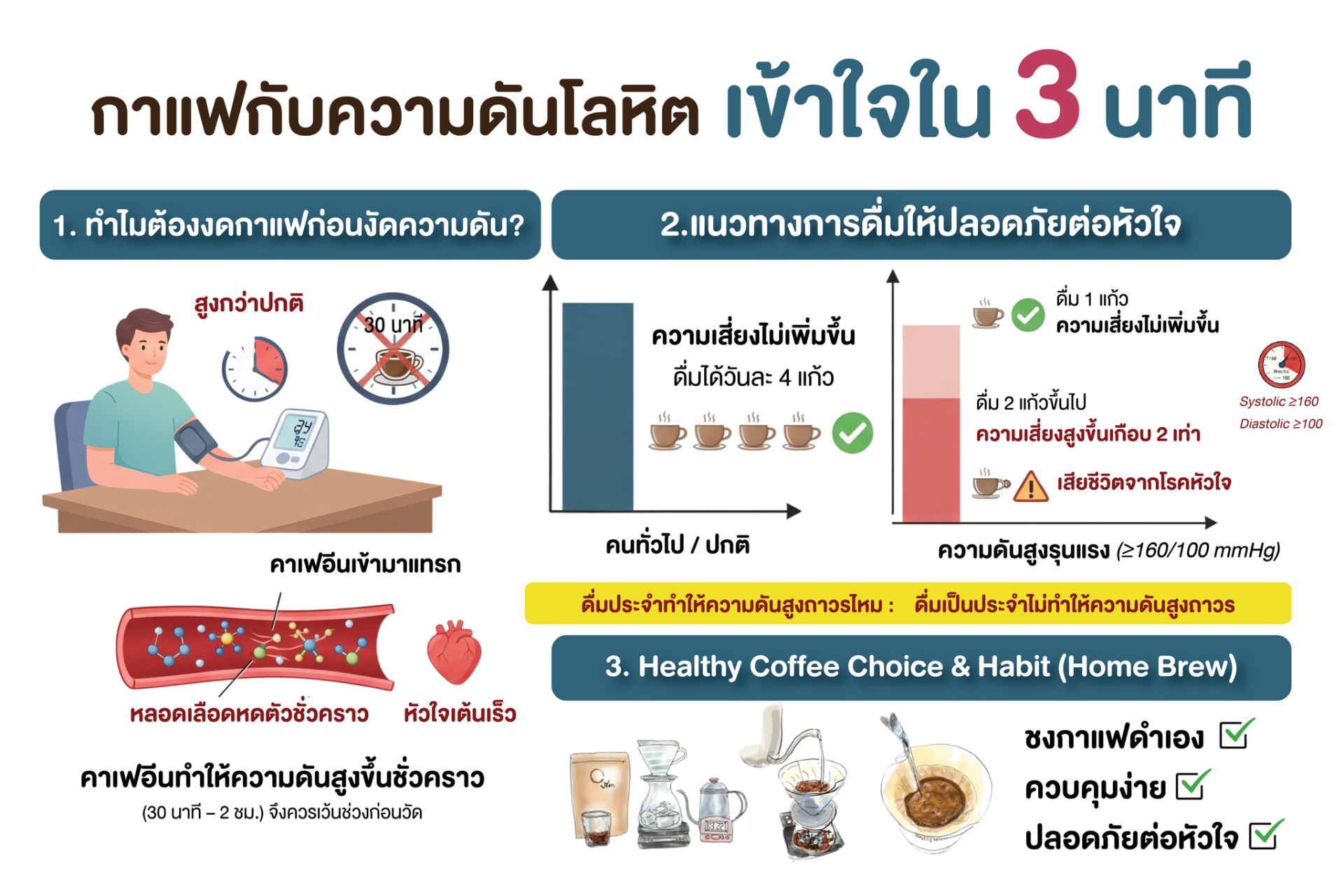
For most people, drinking coffee regularly does not raise the long-term risk of developing high blood pressure — a meta-analysis of 13 long-term studies confirms this. The exception is people who already have severe hypertension (systolic ≥160 or diastolic ≥100): drinking 2 or more cups a day was linked to nearly double the cardiovascular death risk in this group, though 1 cup a day showed no added risk. Anyone in this group should limit intake to 1 cup daily and check with a doctor.Why Do Doctors Say to Skip Coffee Before a Blood Pressure Check?
Ever had a blood pressure reading come back higher than usual, even though your pressure is normally fine? That's not a coincidence — there's a real physiological reason behind it.The mechanism connects to the same one behind why coffee helps you feel less sleepy: caffeine is shaped similarly enough to a natural body compound called adenosine that it can slot into adenosine's receptors and block its signal. In the brain, adenosine builds up and signals sleepiness, so blocking it keeps you alert. But adenosine receptors aren't only in the brain — blood vessel walls have them too, and there adenosine normally helps vessels relax.
When caffeine blocks that same signal in blood vessels, they narrow slightly and the heart beats a bit faster for a short while, which nudges blood pressure up for roughly 30 minutes to 2 hours after drinking. That's exactly why doctors typically recommend skipping coffee for at least 30 minutes before a blood pressure check — so the reading reflects your actual baseline, not a temporary caffeine bump.
Does Drinking Coffee Every Day Cause Long-Term High Blood Pressure?
The real question people want answered isn't about the temporary bump after one cup — it's whether drinking coffee daily, over years, eventually causes hypertension.A systematic review and meta-analysis published in Nutrients in 2023 pooled 25 observational studies: 13 long-term cohort studies (which track the same people forward in time, and are more useful for cause-and-effect questions) and 12 cross-sectional studies (a snapshot at one point in time). The cohort-study results — the more reliable of the two for this question — found that people who drank more coffee were not more likely to develop hypertension than people who drank less. If anything, the pooled data leaned slightly toward lower risk.
That pattern held up fairly consistently across sex, amount consumed, and caffeinated versus decaffeinated coffee. That said, the researchers themselves noted the result depended a fair amount on the quality and characteristics of the individual studies included, and called for more research to confirm it — so this isn't strong enough evidence to claim coffee "prevents" hypertension, only that the available data doesn't show it raising the risk.
Why Doesn't Coffee Raise Blood Pressure Long-Term, Even With Caffeine in It?
That might sound like a contradiction — caffeine causes a temporary bump after each cup, so why doesn't the long-term data show any added risk?One explanation nutrition researchers point to is that coffee isn't just caffeine. It also contains plant compounds — chlorogenic acid, quinic acid, and melanoidins among them — that may help support healthy blood vessel lining function (endothelial function) over time. In simple terms, caffeine's short-term narrowing effect and these other compounds' vessel-relaxing effect may roughly balance each other out over years of regular drinking, which is why habitual coffee drinkers, as a group, don't end up looking much different from non-drinkers.
This is why coffee's effect on blood pressure really needs to be thought of as two separate questions: what happens in the short window right after a cup, versus what the bigger picture looks like from years of habitual drinking. They're not the same story.
What Should People Who Already Have High Blood Pressure Watch Out For?
The general picture is reassuring, but there's one group where the data says something specific and worth knowing.A nearly 19-year study following over 18,600 adults in Japan (the Japan Collaborative Cohort Study) recorded 842 cardiovascular deaths and broke participants down by blood pressure category, from normal through severe. Among people with normal, mildly elevated, or grade-1 blood pressure, coffee drinking — at any amount tested — showed no increased risk of cardiovascular death. But among people with severe hypertension (systolic ≥160 or diastolic ≥100 mmHg), those drinking 2 or more cups of coffee daily had nearly double the cardiovascular death risk compared to non-drinkers, while those drinking just 1 cup a day in this same group showed no added risk. Green tea showed no increased risk at any blood pressure level.
Picture a pipe that's already stretched close to its limit — a little extra pressure pushed through it matters far more than the same push through a pipe with plenty of room to spare. Blood vessels in someone with severe hypertension are in a somewhat similar state, which may make them more sensitive to caffeine's short-term stimulating effect. The study's authors suggested this group may be especially sensitive to caffeine, to the point that the downside could outweigh coffee's usual overall health associations.
What Kind of Coffee, and How Much a Day, Is Safest for Heart Health?
In practical terms: people with normal or mildly elevated blood pressure can keep drinking coffee as usual without worrying about long-term hypertension risk — general guidance suggests up to about 4 cups a day. Anyone diagnosed with severe hypertension should limit intake to 1 cup a day and check with their doctor about what's right for their specific situation. Whatever your blood pressure, it's worth skipping coffee for at least 30 minutes before a reading, and avoiding caffeine in the afternoon and evening so it doesn't disrupt sleep.
Most of the research behind these findings tested plain black, unsweetened coffee. Preda customers who brew drip coffee at home are, for the most part, already drinking it this way — black, without added sugar — which also makes it far easier to control both the amount and what's actually in the cup compared to sweetened coffee drinks from a shop. A drip coffee from Preda's House Blend line-up, such as Original Blend, brews well black for this kind of everyday drinking. For anyone who wants to cut back on caffeine while keeping the drip-brewing ritual itself, Preda is currently developing "Low Cap," a low-caffeine coffee made through a fermentation process — though it isn't available for sale yet.
Frequently Asked Questions (FAQ)
Q1. Will drinking coffee before a blood pressure check make the reading inaccurate?
Yes. Caffeine can temporarily raise blood pressure for roughly 30 minutes to 2 hours after drinking, so doctors generally recommend skipping coffee for at least 30 minutes before a check to get an accurate baseline reading.
Q2. How many cups a day can someone with normal blood pressure safely drink?
Based on available research, people with normal or mildly elevated blood pressure can drink coffee as usual without a significant increase in cardiovascular risk — general guidance suggests up to about 4 cups a day.
Q3. Can someone who already has high blood pressure drink coffee?
It depends on severity. People with severe hypertension (systolic ≥160 or diastolic ≥100) should limit intake to 1 cup a day and consult a doctor, since long-term study data links 2 or more cups a day to nearly double the cardiovascular death risk specifically in this group.
Q4. Is decaf coffee safer for blood pressure than regular coffee?
The meta-analysis referenced here found no clear long-term difference in hypertension risk between caffeinated and decaffeinated coffee. But for the short-term spike right after a cup, caffeine is the main driver — which is why people concerned about that effect often choose low-caffeine or decaf options.
Q5. What kind of coffee is best for someone concerned about blood pressure?
Most of the relevant research tested plain black, unsweetened coffee. Brewing drip coffee black at home makes it easier to control both the amount and the ingredients than a sweetened coffee drink from a shop.
References : Haghighatdoot F, et al. "Coffee Consumption and Risk of Hypertension in Adults: Systematic Review and Meta-Analysis." Nutrients 2023;15(13):2969 (25 observational studies: 13 cohort + 12 cross-sectional; registration CRD42022371494)