"Resilient... but not delicious."
Last updated: 25 Sept 2026
1651 Views
"Resilient... but not delicious." This is the verdict often handed down to Catimor. But in today’s world of Specialty Coffee, does this claim still hold true? Or have we simply not yet discovered its true identity?
A Beginning Rooted in Survival
Catimor was developed in the late 1950s as a crossbreed between Caturra, known for its excellent flavor, and Hybrid de Timor, famous for its hardiness. Back then, the goal wasn't to create the most exquisite flavor profile, but rather to ensure "survival" against the Coffee Leaf Rust epidemic that was ravaging plantations worldwide.
In Thailand, Catimor has been promoted for over 40 years due to its ease of cultivation, strength, and consistent yield. However, its historical reputation was one of "dull flavor, bitter finish, and a lack of aromatic complexity." This was largely due to the limited knowledge of farm management and processing at the time.
Is the Problem the "Variety" or the "Care"?
The fascinating truth is that when Catimor is given the right attention, its flavor transforms miraculously.
Farm Management: Selectively harvesting only peak-ripeness (Full Red Cherries).
Meticulous Processing: Understanding fermentation and controlling drying conditions precisely.
The result is a coffee that is sweet, clean, and bursting with fresh fruit notes—so much so that it’s hard to believe it’s the same variety as the mass-market coffee we’re used to.
SCM Dry Process: Proof that Catimor can be "Specialty"
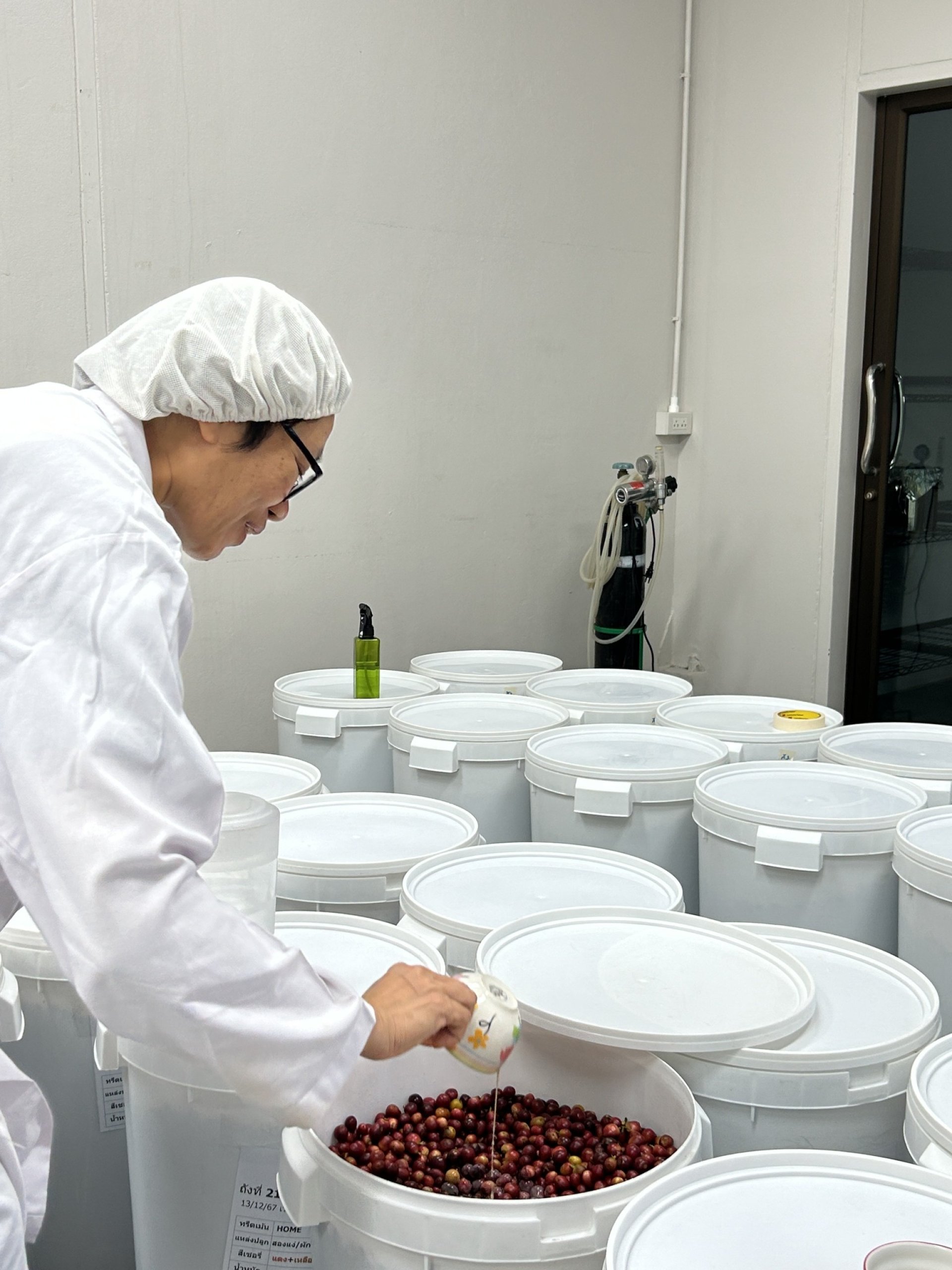
If you still have doubts, look no further than Preeda Coffee Roaster’s SCM Dry Process. By taking graded Catimor cherries and applying Carbonic Maceration, they have completely shattered old stereotypes.
Flavor Profile: Bright acidity reminiscent of green apples and grapes.
Body: Full-bodied with a smooth, velvety mouthfeel.
Aftertaste: A long, lingering sweetness.
Quality doesn't stop at genetics. Catimor might not have been "glamorous" from birth, but it is a variety with immense potential waiting to be polished. Ultimately, whether a cup of coffee is great depends on more than just DNA—it depends on the "care" given from the upstream farm to the final cup in your hand.
A Beginning Rooted in Survival
Catimor was developed in the late 1950s as a crossbreed between Caturra, known for its excellent flavor, and Hybrid de Timor, famous for its hardiness. Back then, the goal wasn't to create the most exquisite flavor profile, but rather to ensure "survival" against the Coffee Leaf Rust epidemic that was ravaging plantations worldwide.
In Thailand, Catimor has been promoted for over 40 years due to its ease of cultivation, strength, and consistent yield. However, its historical reputation was one of "dull flavor, bitter finish, and a lack of aromatic complexity." This was largely due to the limited knowledge of farm management and processing at the time.
Is the Problem the "Variety" or the "Care"?
The fascinating truth is that when Catimor is given the right attention, its flavor transforms miraculously.
Farm Management: Selectively harvesting only peak-ripeness (Full Red Cherries).
Meticulous Processing: Understanding fermentation and controlling drying conditions precisely.
The result is a coffee that is sweet, clean, and bursting with fresh fruit notes—so much so that it’s hard to believe it’s the same variety as the mass-market coffee we’re used to.
SCM Dry Process: Proof that Catimor can be "Specialty"
If you still have doubts, look no further than Preeda Coffee Roaster’s SCM Dry Process. By taking graded Catimor cherries and applying Carbonic Maceration, they have completely shattered old stereotypes.
Flavor Profile: Bright acidity reminiscent of green apples and grapes.
Body: Full-bodied with a smooth, velvety mouthfeel.
Aftertaste: A long, lingering sweetness.
Quality doesn't stop at genetics. Catimor might not have been "glamorous" from birth, but it is a variety with immense potential waiting to be polished. Ultimately, whether a cup of coffee is great depends on more than just DNA—it depends on the "care" given from the upstream farm to the final cup in your hand.


Related Content


เบื้องหลังงานโปรเสสของปรีดาทำไมปรีดาโปรเสสใช้คนเยอจัง? คลิปนี้เป็นคำอธิบายส่วนหนึ่งครับ
วันนี้เราจะมาพูดถึง กระบวนการแปรรูปแบบแห้ง ซึ่งวิธีนี้เป็นวิธีการแปรรูปแบบดั้งเดิม เป็นที่นิยมในภูมิภาคที่ขาดแคลนน้ำ
