French Roast: Bold Yet Smooth Dark Coffee
Last updated: 3 Sept 2026
2159 Views
French Roast, Bold Yet Mellow: How to Roast Dark Coffee Without the Bitterness
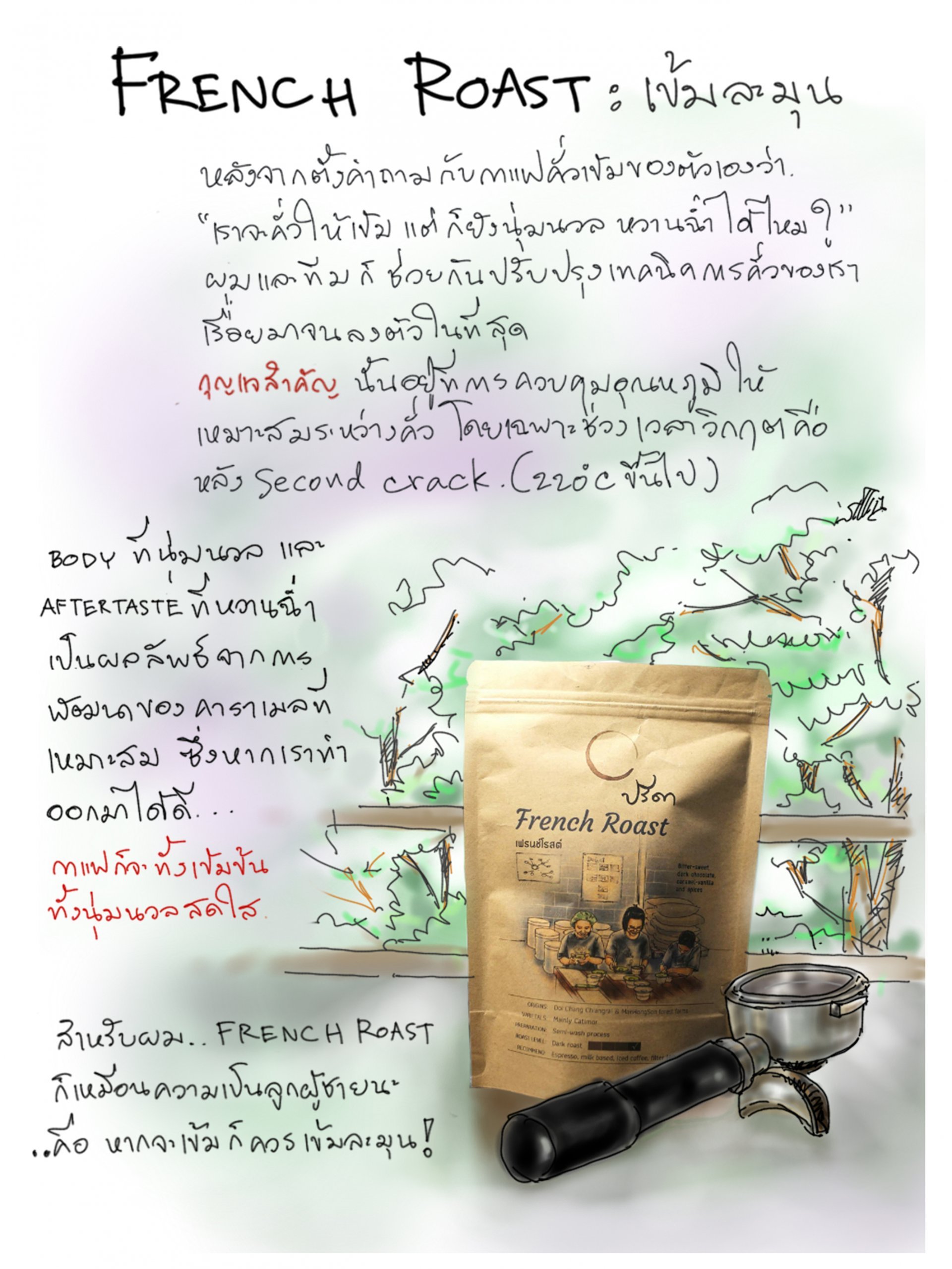
Yes — French roast can be both intense and smooth. The key is precise temperature control right after second crack (220°C/428°F+), which lets the beans' sugars caramelize fully instead of burning. The result: a smooth-bodied, dark-chocolate coffee with a sweet finish — what Preda calls "เข้มละมุน" (bold yet mellow).
What Is French Roast — Why Is It the Darkest Roast Level?
French roast is the most intense roast level (5/5). The beans move through both first and second crack until natural oils rise to the surface, producing a bold flavor, a subtle smoky aroma, and a heavy body. It's built for coffee drinkers who want an intense cup, and works well as espresso, in milk drinks, or over ice.
Why Do Most Dark Roasts Taste Bitter — But Not This One?
Most dark roast coffee turns bitter because it's roasted past the point where the beans' natural sugars fully caramelize, so the sugar burns into bitterness instead of developing sweetness. A great dark roast needs to live up to its intensity, but also needs chocolate notes and caramel sweetness to balance that intensity into a "bittersweet" profile rather than a burnt one. That balance is exactly what Preda's team set out to solve when they asked themselves: "Can we roast it dark and still keep it smooth and sweet?"
What's the Secret to Roasting It "Bold Yet Mellow"?
The key is precise temperature control during roasting — especially the critical window right after second crack (220°C/428°F and above). Unlike a typical dark roast, where the gap between deep flavor and scorched bitterness can be a matter of seconds, the roaster has to watch bean color, aroma, and sheen closely, ready to stop the moment caramelization peaks.
A smooth body and a lingering sweet finish are the direct result of that fully-developed caramelization. Get the timing right, and the coffee comes out intense, smooth, and bright all at once.
What Does Preda's French Roast Taste Like?
Preda's French Roast is 100% Thai Arabica from Mae Hong Son, hand-sorted and roasted to the darkest level (5/5). It delivers rich dark-chocolate notes layered with mellow caramel-syrup sweetness, a full body, and a lingering bittersweet finish — without any burnt or scorched taste.
How Should You Brew French Roast for the Best Flavor?
Let the beans rest (degas) for 3-5 days after roasting before brewing. For pour-over, use water at 92-95°C (198-203°F) to bring out full flavor and aroma. Beyond pour-over, it also shines as espresso, in milk-based drinks like lattes and cappuccinos, and over ice, since its heavy body holds its own even mixed with milk or ice.
The Takeaway: Dark Doesn't Have to Mean Bitter
For Kee, Preda Roasting House's founder, French roast is a bit like being a man — if you're going to be intense, be intense with elegance. Bold in flavor, but still smooth and bright in every cup.
Frequently Asked Questions (FAQ)
Q1. How is French roast different from regular dark roast?
French roast is the darkest roast level (5/5), pushed fully through second crack for a heavier body and more smoky aroma than a standard dark roast. Done well, it comes out bittersweet rather than burnt-bitter.
Q2. Why does most dark roast coffee taste bitter?
Because it's roasted past the point where the beans' natural sugars fully caramelize, so the sugar burns into bitterness instead of developing sweetness. French roast done right stops exactly at peak caramelization.
Q3. What is "second crack" and why does it matter for French roast?
Second crack is the second audible crack in the beans, happening around 220°C (428°F) and up — it's the critical window that decides whether the roast turns out bold-yet-smooth or scorched and bitter.
Q4. What's the best way to brew Preda's French Roast?
It works well as espresso, in milk-based drinks like lattes and cappuccinos, and over ice — its full body holds its own even mixed with milk or ice.
Q5. How long should French roast beans rest before brewing?
Let them degas for 3-5 days after roasting, then brew pour-over with water at 92-95°C (198-203°F) to bring out full flavor and aroma.
Yes — French roast can be both intense and smooth. The key is precise temperature control right after second crack (220°C/428°F+), which lets the beans' sugars caramelize fully instead of burning. The result: a smooth-bodied, dark-chocolate coffee with a sweet finish — what Preda calls "เข้มละมุน" (bold yet mellow).
What Is French Roast — Why Is It the Darkest Roast Level?
French roast is the most intense roast level (5/5). The beans move through both first and second crack until natural oils rise to the surface, producing a bold flavor, a subtle smoky aroma, and a heavy body. It's built for coffee drinkers who want an intense cup, and works well as espresso, in milk drinks, or over ice.
Why Do Most Dark Roasts Taste Bitter — But Not This One?
Most dark roast coffee turns bitter because it's roasted past the point where the beans' natural sugars fully caramelize, so the sugar burns into bitterness instead of developing sweetness. A great dark roast needs to live up to its intensity, but also needs chocolate notes and caramel sweetness to balance that intensity into a "bittersweet" profile rather than a burnt one. That balance is exactly what Preda's team set out to solve when they asked themselves: "Can we roast it dark and still keep it smooth and sweet?"
What's the Secret to Roasting It "Bold Yet Mellow"?
The key is precise temperature control during roasting — especially the critical window right after second crack (220°C/428°F and above). Unlike a typical dark roast, where the gap between deep flavor and scorched bitterness can be a matter of seconds, the roaster has to watch bean color, aroma, and sheen closely, ready to stop the moment caramelization peaks.
A smooth body and a lingering sweet finish are the direct result of that fully-developed caramelization. Get the timing right, and the coffee comes out intense, smooth, and bright all at once.
What Does Preda's French Roast Taste Like?
Preda's French Roast is 100% Thai Arabica from Mae Hong Son, hand-sorted and roasted to the darkest level (5/5). It delivers rich dark-chocolate notes layered with mellow caramel-syrup sweetness, a full body, and a lingering bittersweet finish — without any burnt or scorched taste.
How Should You Brew French Roast for the Best Flavor?
Let the beans rest (degas) for 3-5 days after roasting before brewing. For pour-over, use water at 92-95°C (198-203°F) to bring out full flavor and aroma. Beyond pour-over, it also shines as espresso, in milk-based drinks like lattes and cappuccinos, and over ice, since its heavy body holds its own even mixed with milk or ice.
The Takeaway: Dark Doesn't Have to Mean Bitter
For Kee, Preda Roasting House's founder, French roast is a bit like being a man — if you're going to be intense, be intense with elegance. Bold in flavor, but still smooth and bright in every cup.
Frequently Asked Questions (FAQ)
Q1. How is French roast different from regular dark roast?
French roast is the darkest roast level (5/5), pushed fully through second crack for a heavier body and more smoky aroma than a standard dark roast. Done well, it comes out bittersweet rather than burnt-bitter.
Q2. Why does most dark roast coffee taste bitter?
Because it's roasted past the point where the beans' natural sugars fully caramelize, so the sugar burns into bitterness instead of developing sweetness. French roast done right stops exactly at peak caramelization.
Q3. What is "second crack" and why does it matter for French roast?
Second crack is the second audible crack in the beans, happening around 220°C (428°F) and up — it's the critical window that decides whether the roast turns out bold-yet-smooth or scorched and bitter.
Q4. What's the best way to brew Preda's French Roast?
It works well as espresso, in milk-based drinks like lattes and cappuccinos, and over ice — its full body holds its own even mixed with milk or ice.
Q5. How long should French roast beans rest before brewing?
Let them degas for 3-5 days after roasting, then brew pour-over with water at 92-95°C (198-203°F) to bring out full flavor and aroma.


Related Content

Preda's pour-over method for dark roast coffee: fine grind, 90-94°C water, under 3 minutes for a smooth, balanced cup. Plus: is coffee safe for Dad?