Preda Recognized on the World Stage
Last updated: 13 May 2026
424 Views
Preda Recognized on the World Stage
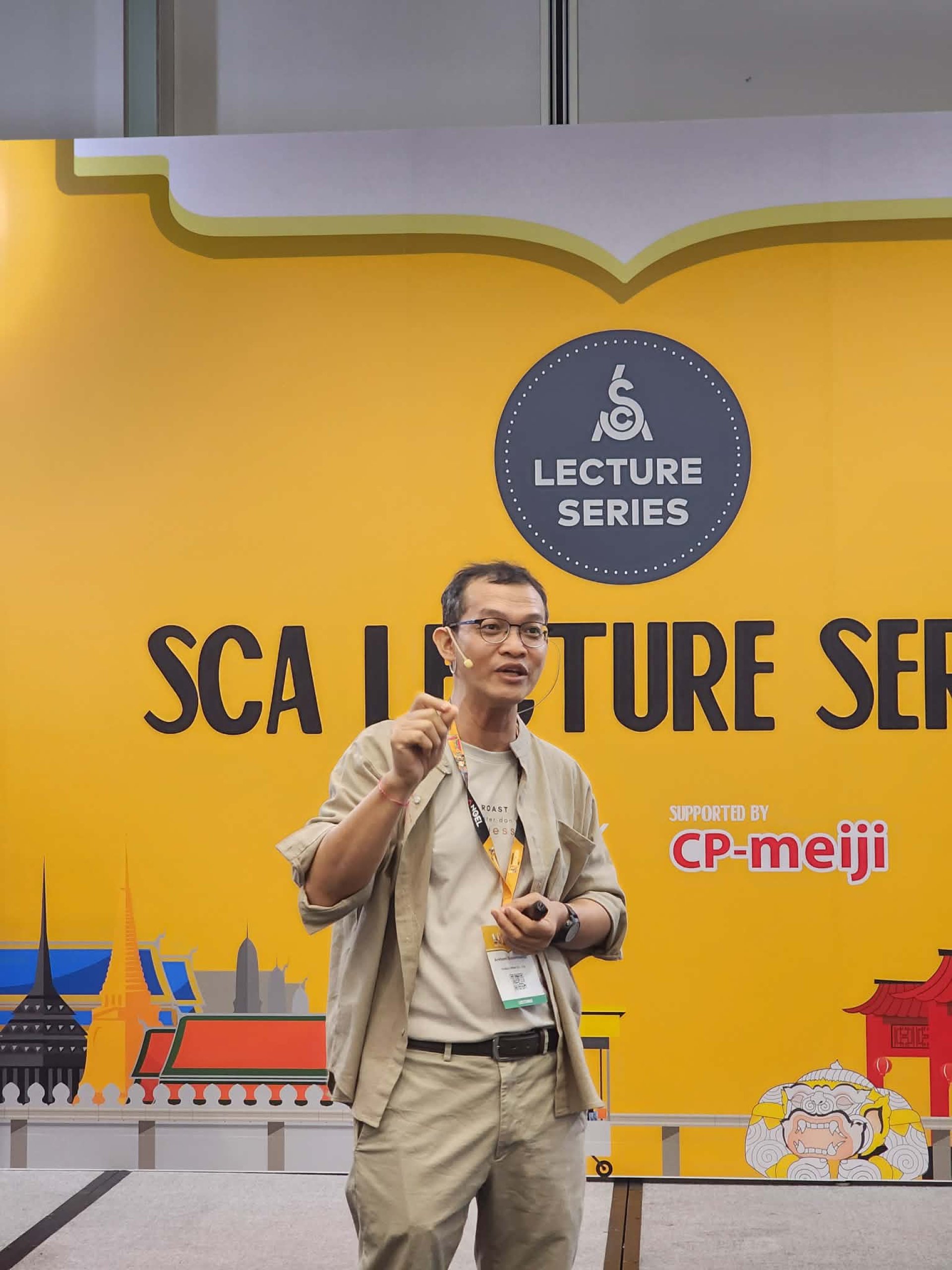
Sharing Preda’s Story at World of Coffee Bangkok 2026It was truly an honor for Preda to be invited as a speaker at the SCA Lecture Series during World of Coffee Bangkok 2026, where we shared the story of coffee processing innovation that has emerged in Thailand over the past decade.
Today, I’d like to share some moments and reflections from the session.
What Did We Share?
About a month ago, Khun Korn and Khun Fuady invited me to join as a speaker for the event. We discussed the overall concept and agreed that this would be a great opportunity to present Preda’s past work to the global coffee community — not only as knowledge sharing, but also as proof of how far Thai coffee has evolved.
One of the key highlights was our work on the LTLH process, which we believe has become an important milestone in elevating the quality and potential of Thai coffee.
The second highlight was our Low Caffeine Coffee project. At Preda, we introduced the idea that caffeine reduction can be achieved naturally through fermentation. Unlike conventional decaffeination methods performed on green coffee beans, this approach helps preserve the coffee’s aromatic and flavor qualities at a true specialty level.
How Did We Tell the Story?
I prepared around 50 slides along with video footage documenting our LTLH workflow. The presentation was shared between myself and Fuady.
I focused on the academic and scientific aspects — the background, development, and technical understanding behind the process. Fuady then expanded on how the knowledge was shared openly with farmers through the “Scath Lุยสวน” project, eventually leading to wider adoption across Thailand.
Today, there are already many farmers and coffee processors practicing LTLH — likely around 100 farms.
“Strawberry Field” became one of the strongest examples of how LTLH fermentation and drying techniques can create a coffee with a highly distinctive and repeatable flavor profile. The coffee has maintained a loyal following for more than eight seasons.
So naturally… we let everyone taste it.
For the Low Caffeine Coffee project — which I named “Lowcap” — I explained the theoretical possibility of reducing caffeine during the fermentation stage before drying, along with HPLC (High Performance Liquid Chromatography) test results comparing caffeine levels between Lowcap and conventionally processed coffees.
And of course… we let them taste that too.
Because in the end, no matter how convincing the science sounds, coffee should speak for itself.
Inside the Lecture Room
Honestly, I don’t think I’ve ever felt this excited during a presentation before.
The audience came from many countries — producers, roasters, industry professionals, and passionate coffee tasters from around the world.
As the session began, I took everyone back to 2017, when Preda first started experimenting with coffee processing. At the beginning, we simply wanted to create more interesting and expressive taste notes. But once we started experimenting, we realized that good fermentation alone was not enough.
If drying was poorly managed, the coffee could still become muddy and develop other quality issues.
As we moved deeper into the science behind the process, many audience members were taking notes seriously and photographing the slides. The more I explained, the more enjoyable the session became for me as well.
When the team served Strawberry Field, we immediately received positive feedback from the audience:
“The coffee is delicious.”
That gave us confidence to continue into the Lowcap section.
I explained that there are enzymes involved in caffeine degradation, but the challenge lies in designing a fermentation environment that supports both enzymatic activity and the relevant microorganisms. It requires a truly specialized fermentation approach.
The reason I started the Lowcap project actually came from my own personal pain point — I began experiencing sleepless nights whenever I drank coffee in the afternoon. After researching recent scientific studies, I realized there might be real possibilities in this direction.
It wasn’t just a random idea.
(Then we served Lowcap.)
I asked everyone in the room,
“How does it taste? Is it acceptable?”
Everyone nodded encouragingly.
One voice from the audience replied:
“Very good texture.”
And just like that, 50 minutes passed incredibly quickly.
The applause at the end signaled that our mission on stage had been successfully completed.
I would like to sincerely thank everyone behind this session:
Korn, Fuady, Om from Roots, the Preda team (Ford and Nuk), and everyone in the audience who supported us throughout the lecture.
This was truly one of the most memorable experiences of my life.
— Kee
8 May 2026


